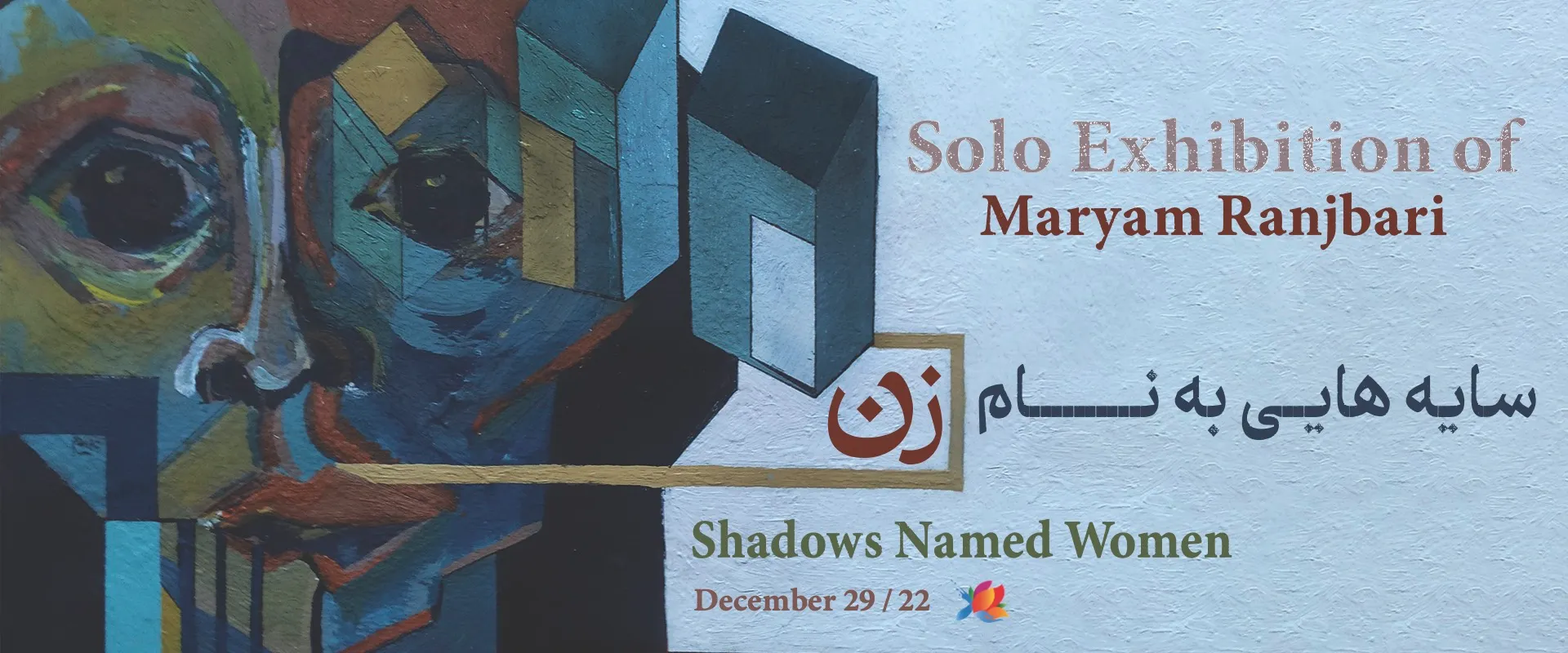
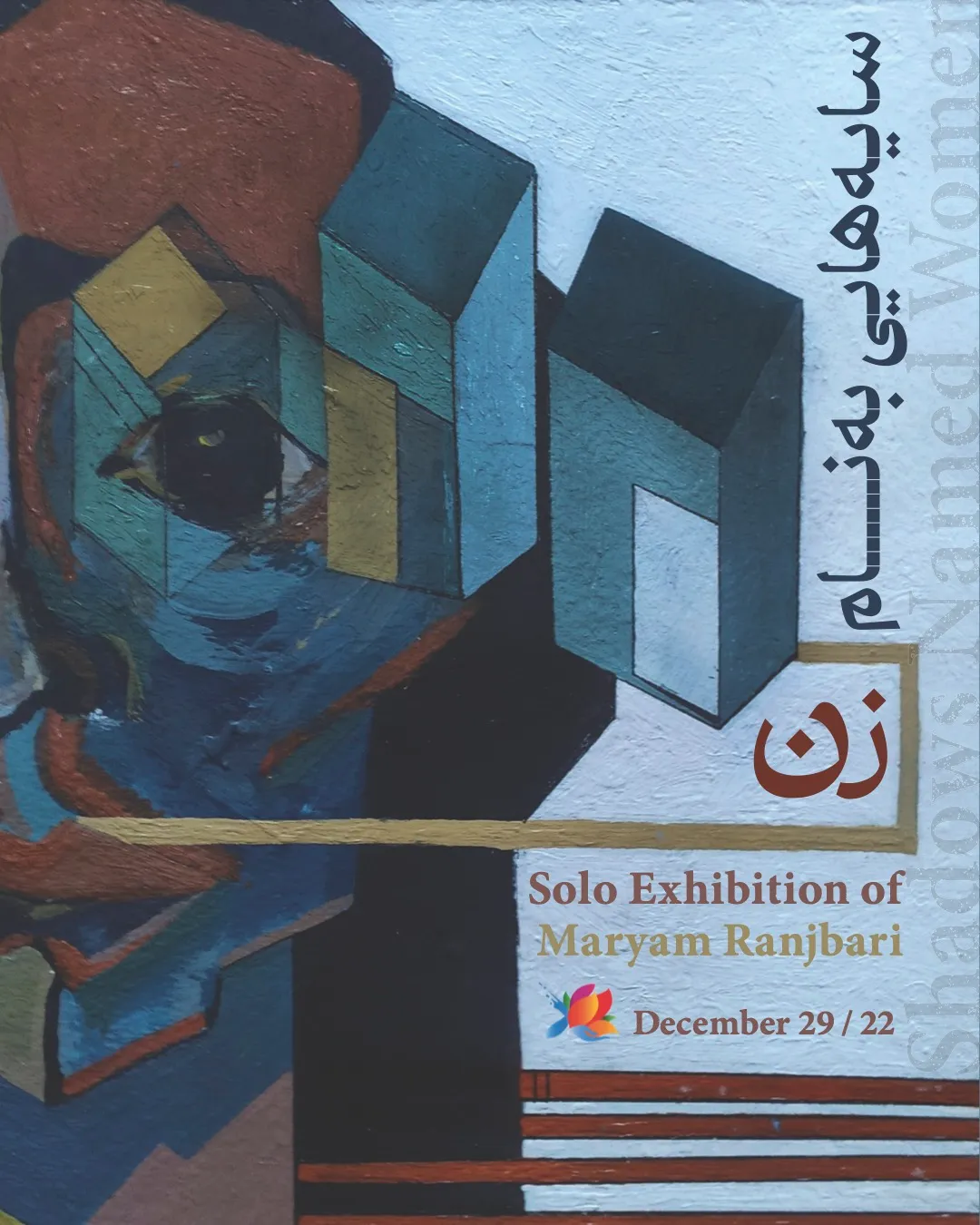
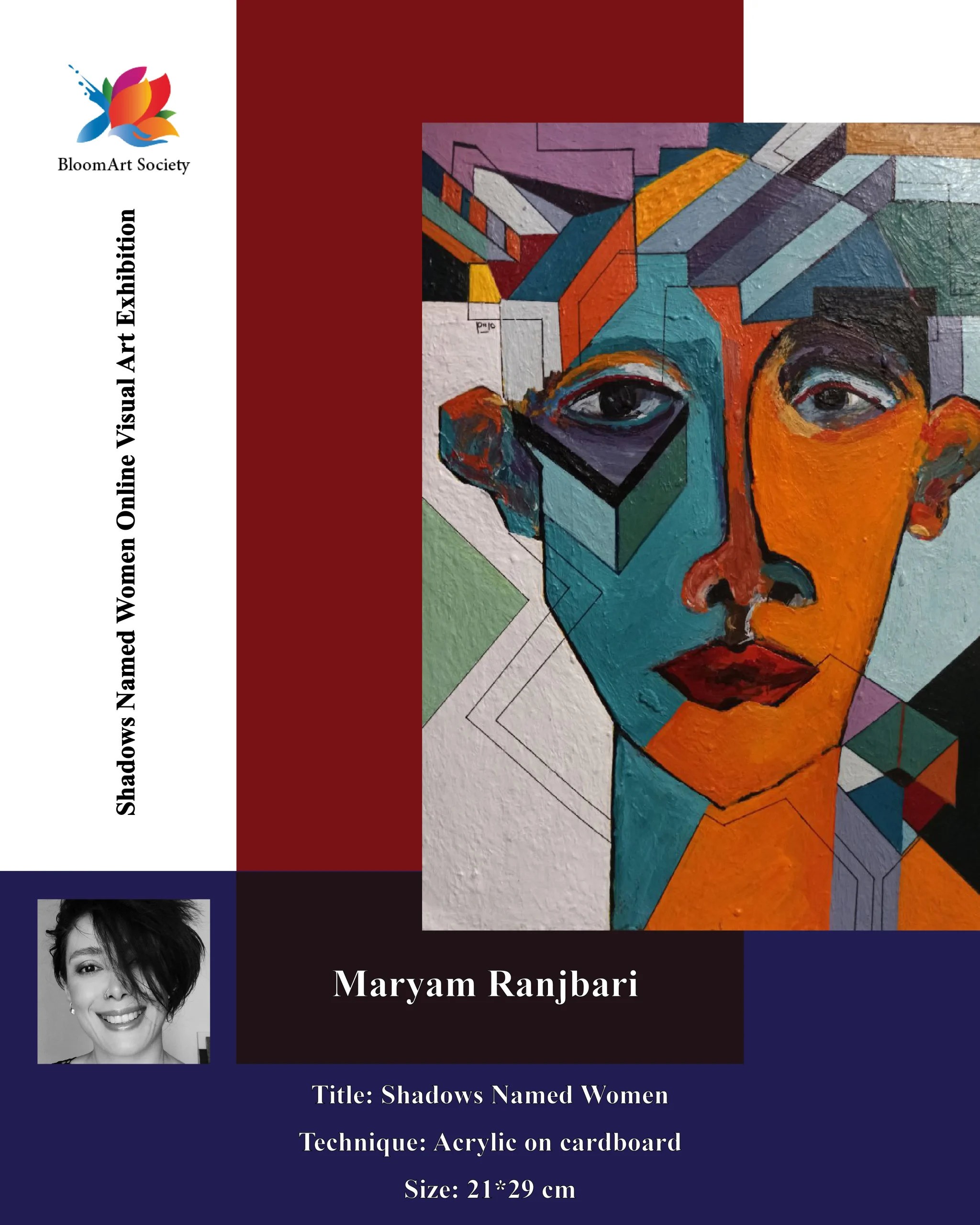
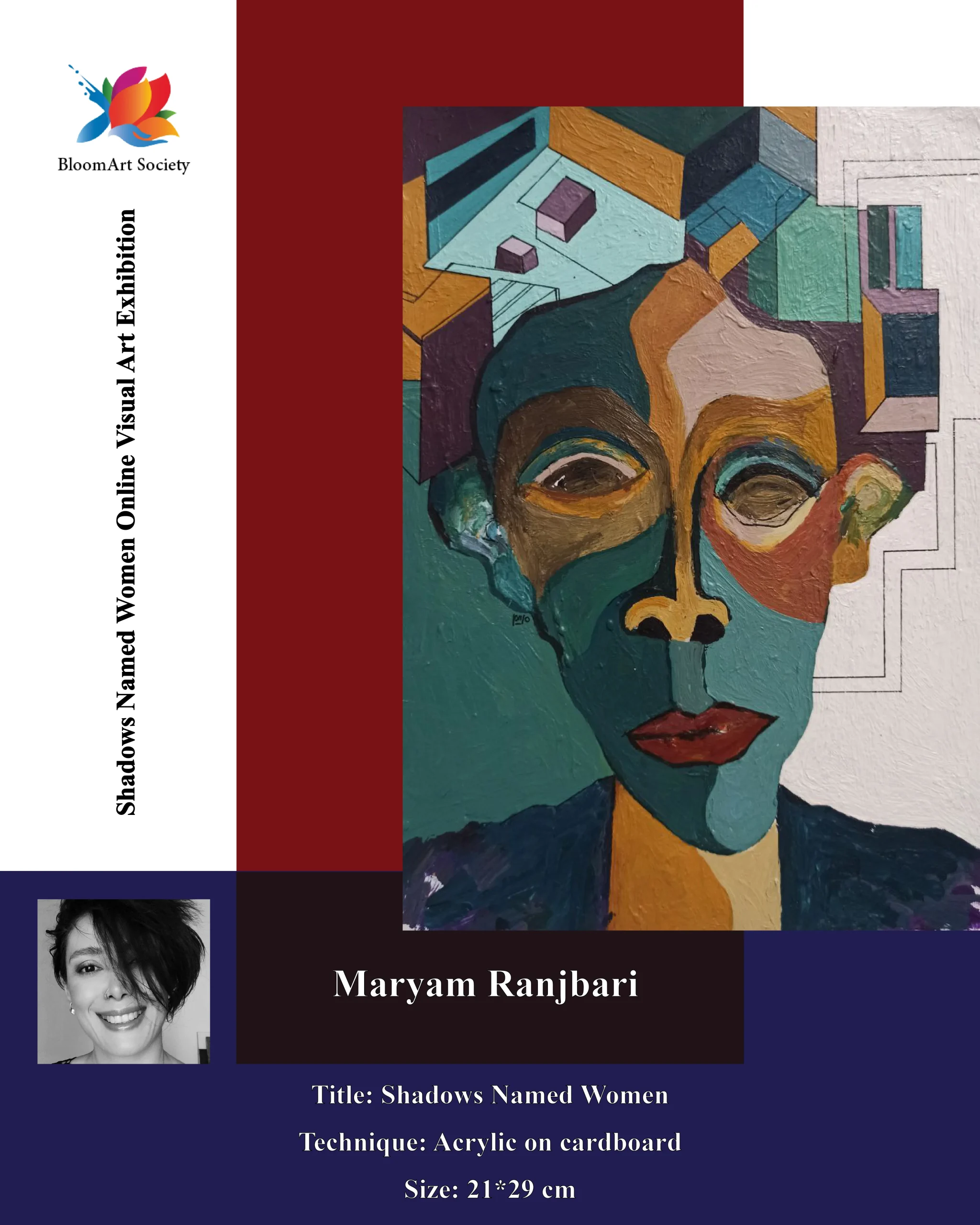
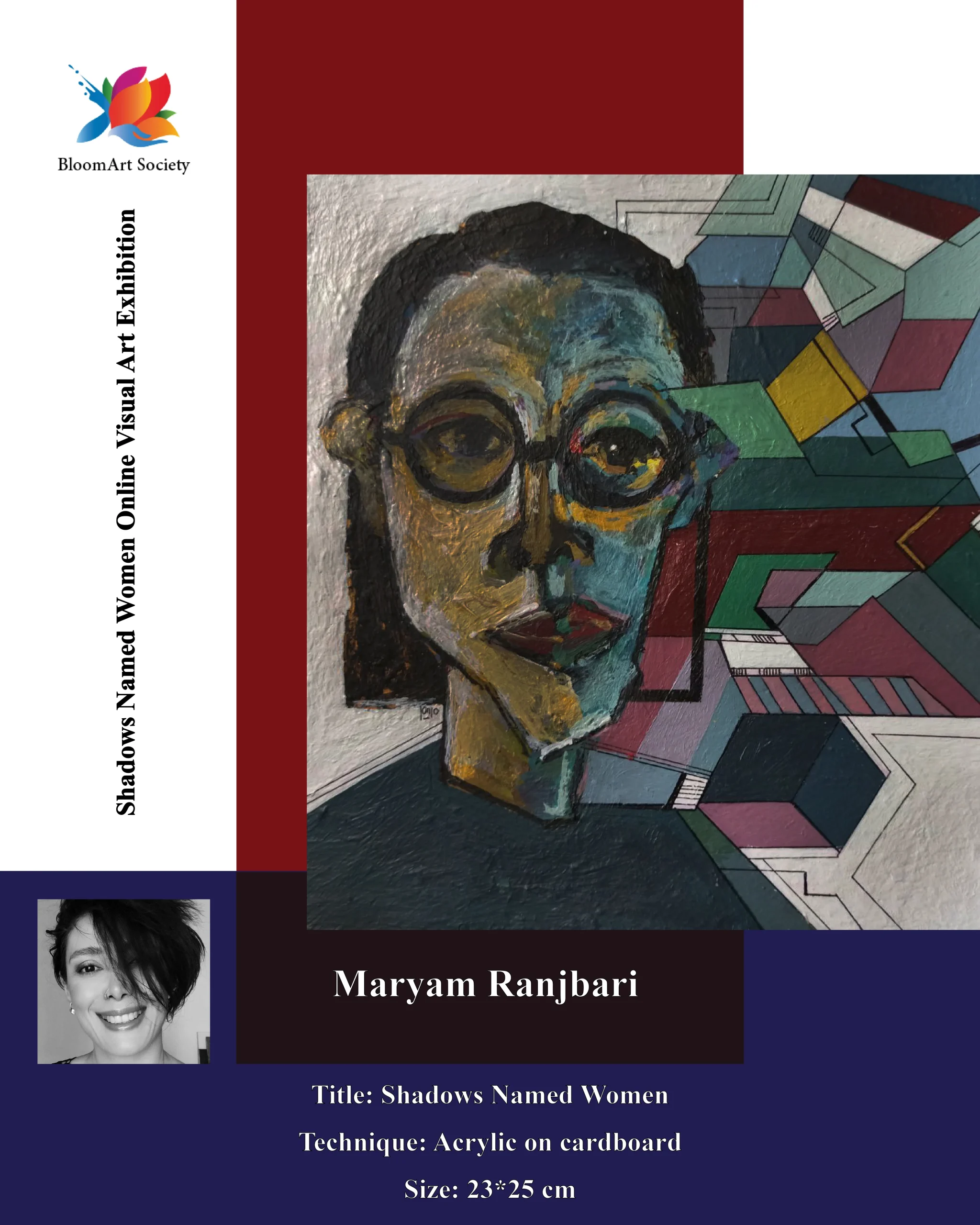
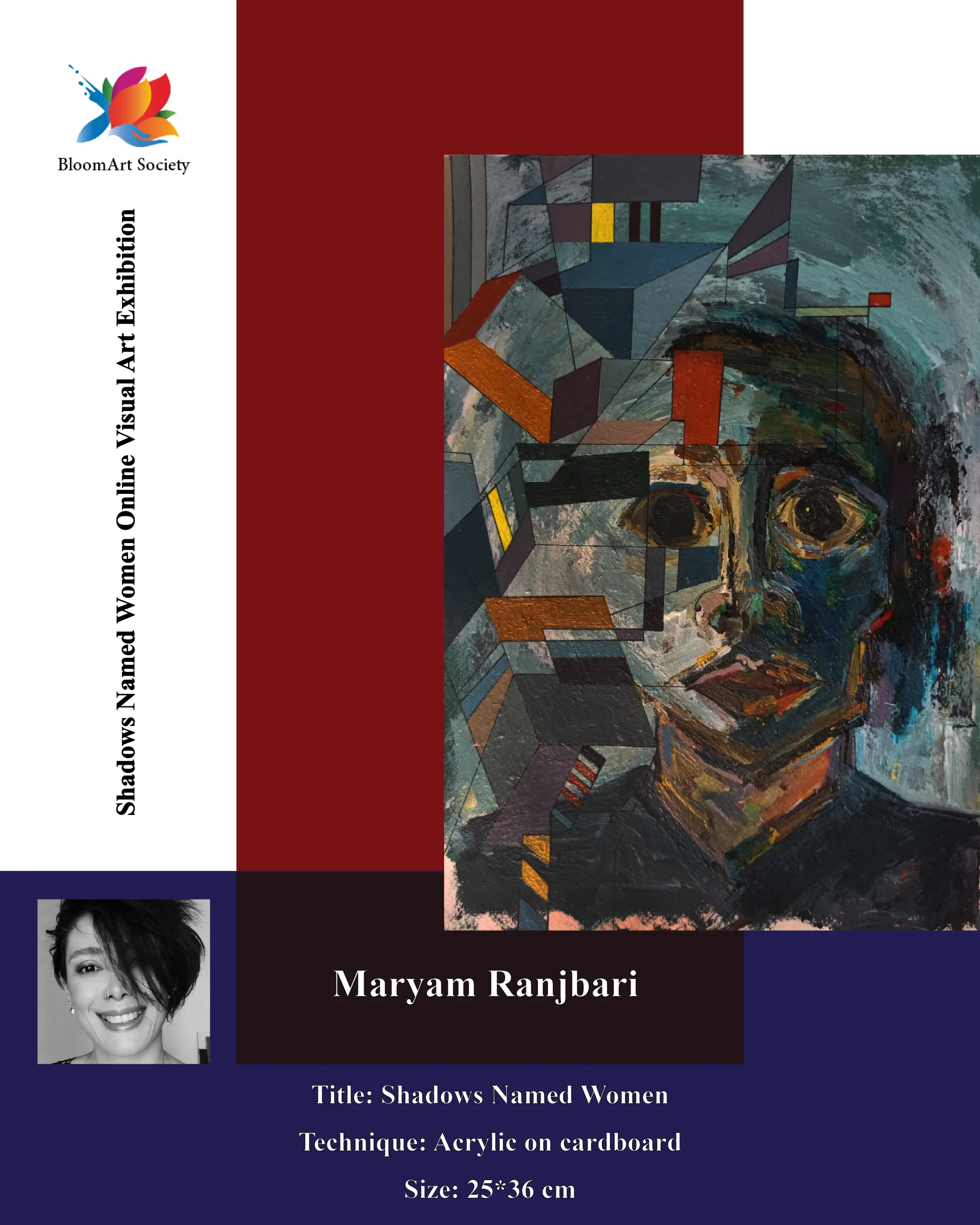
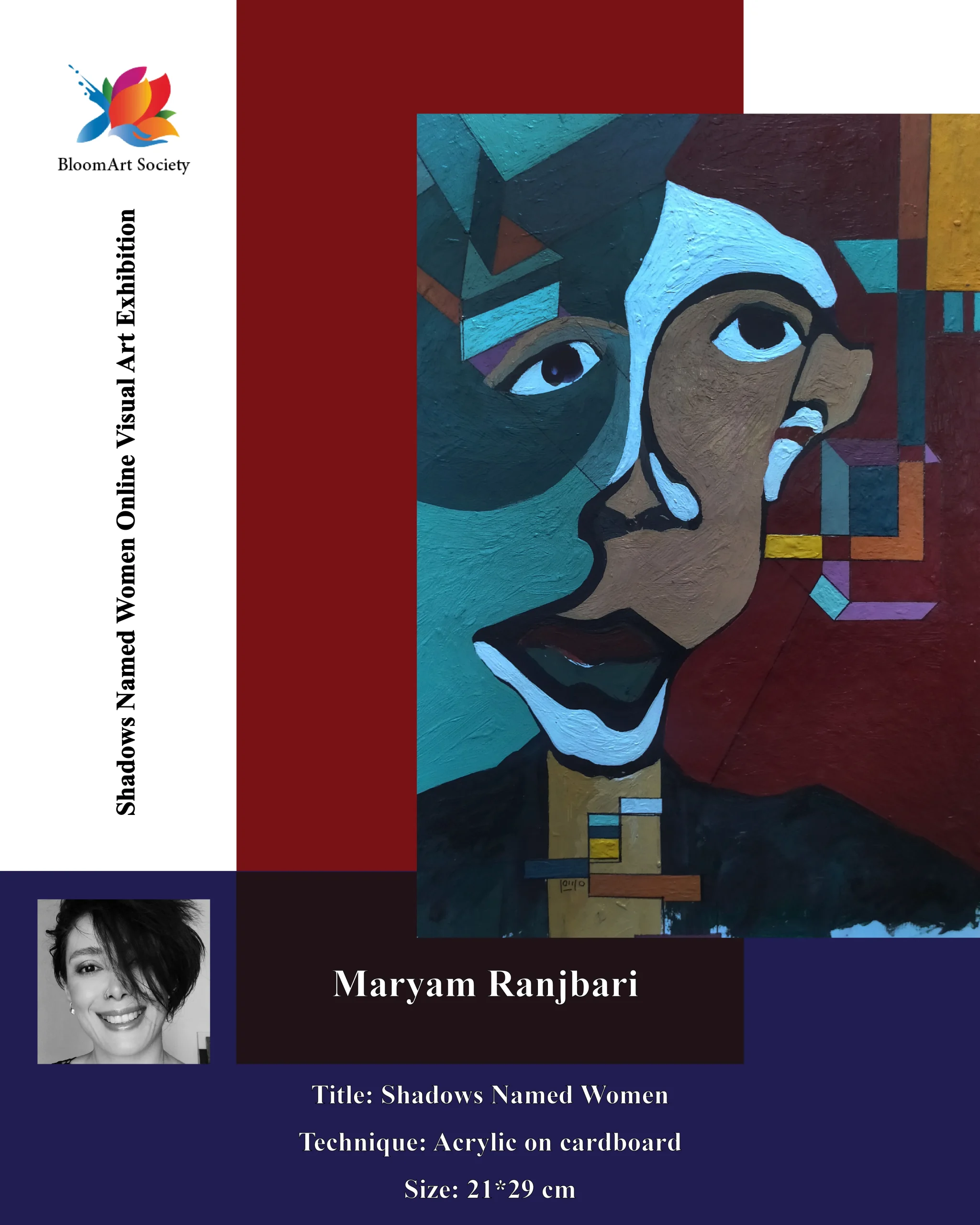
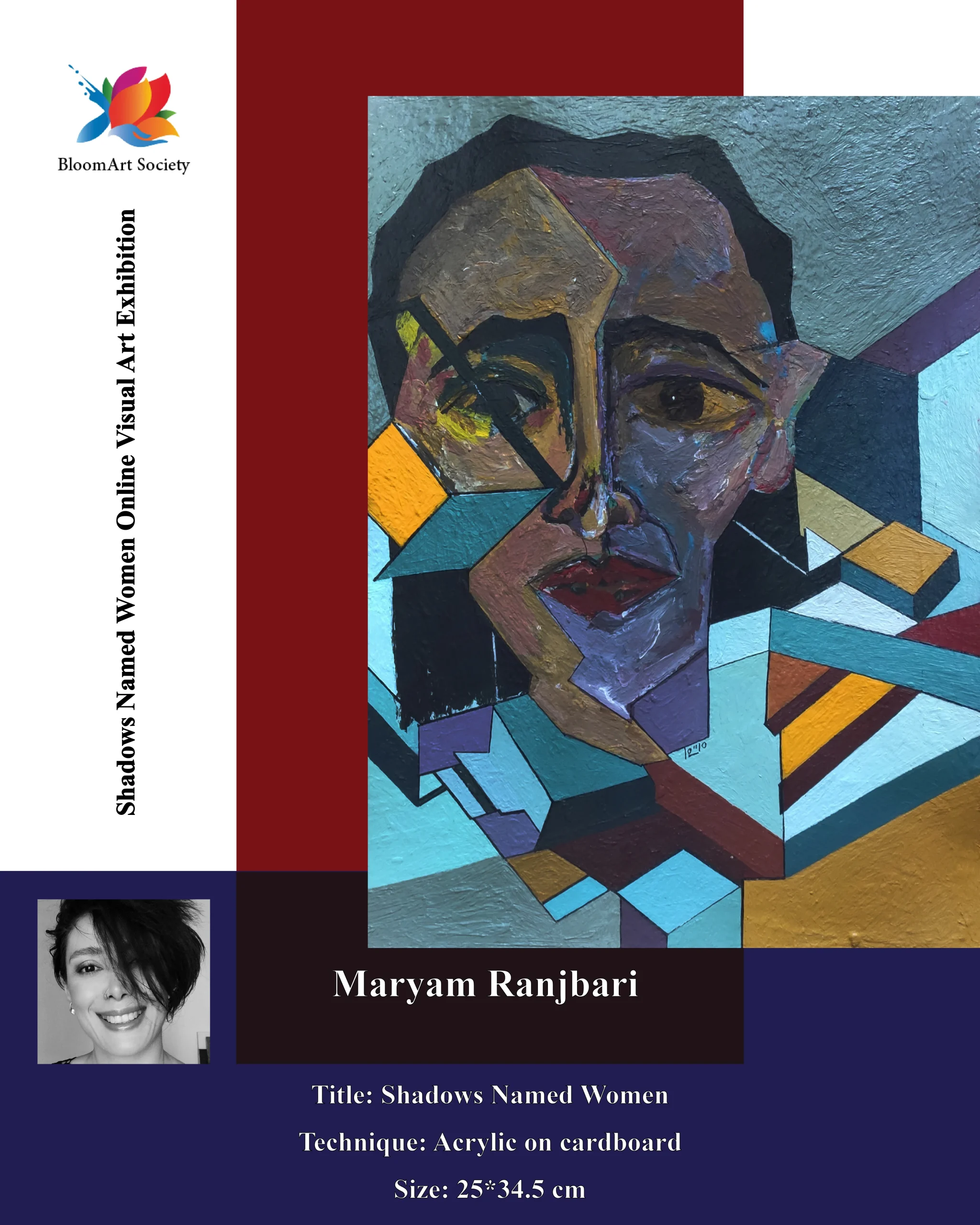
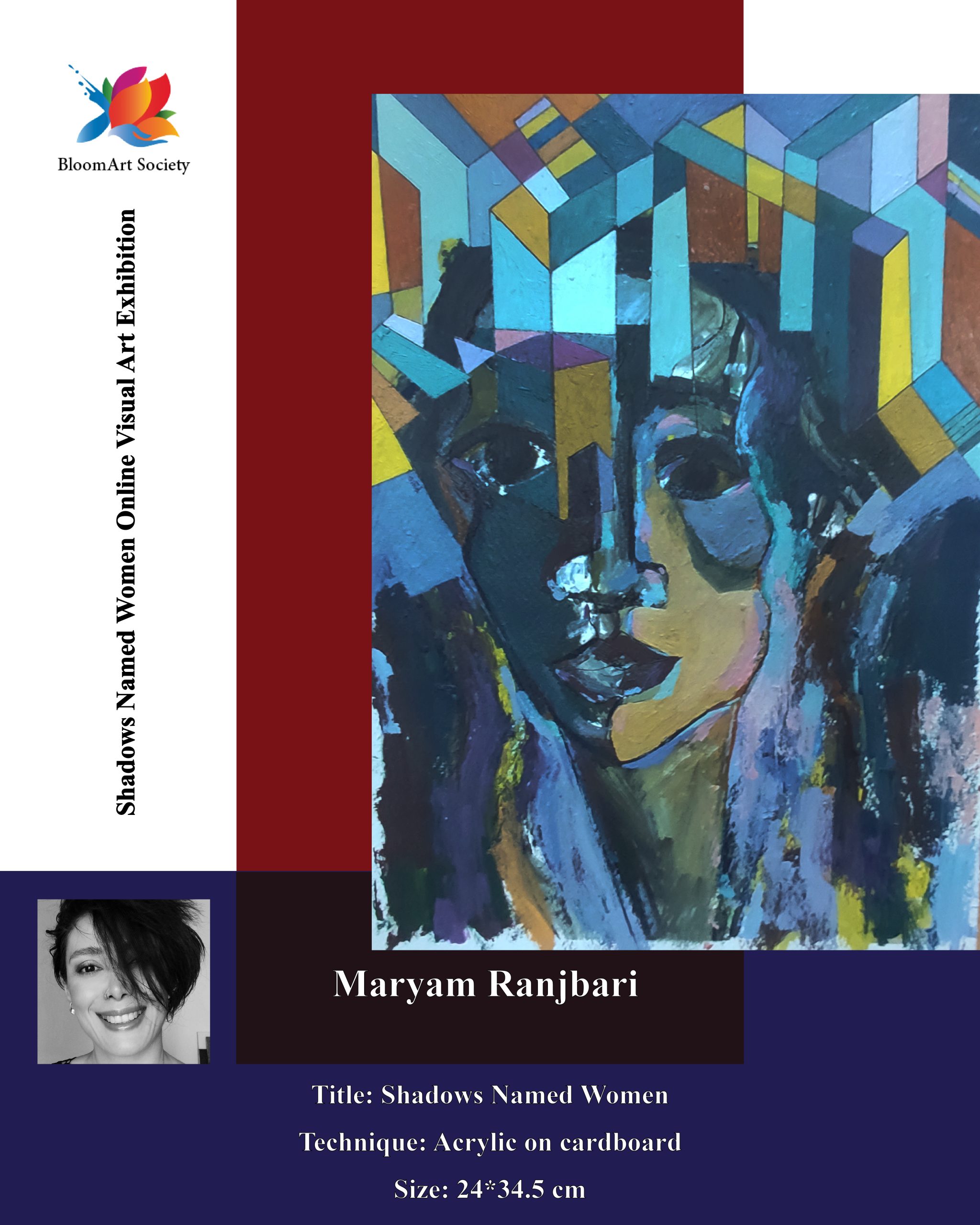
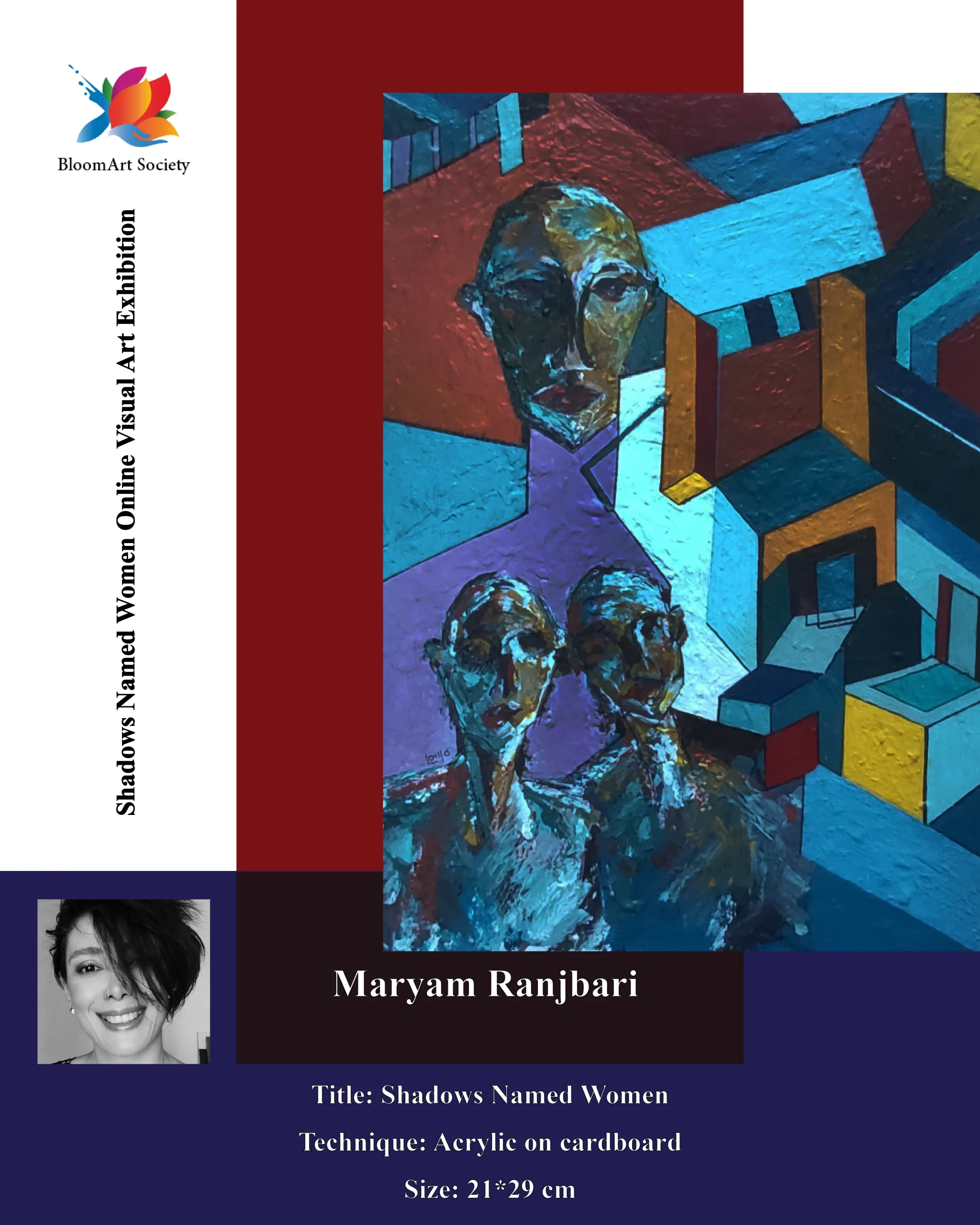
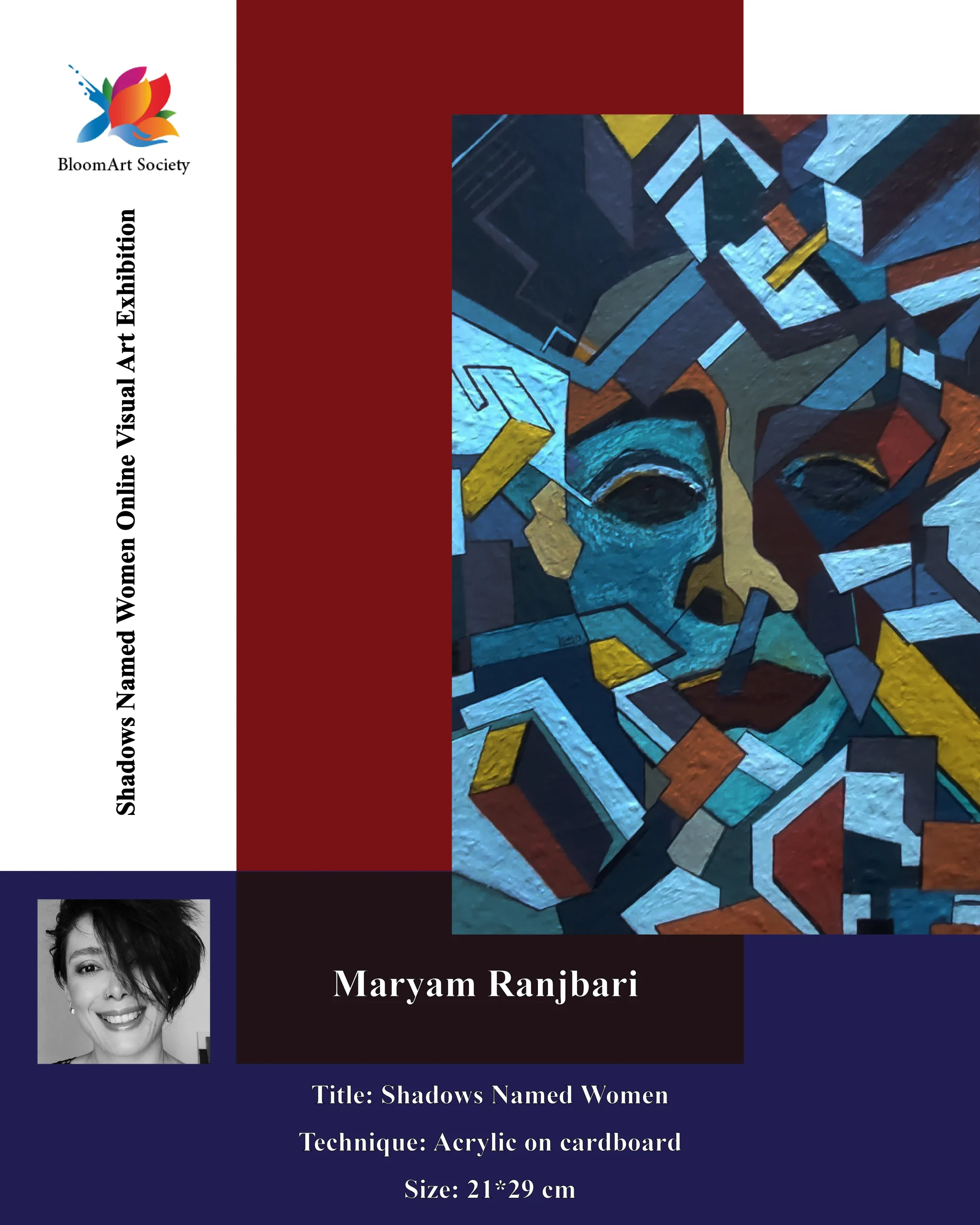
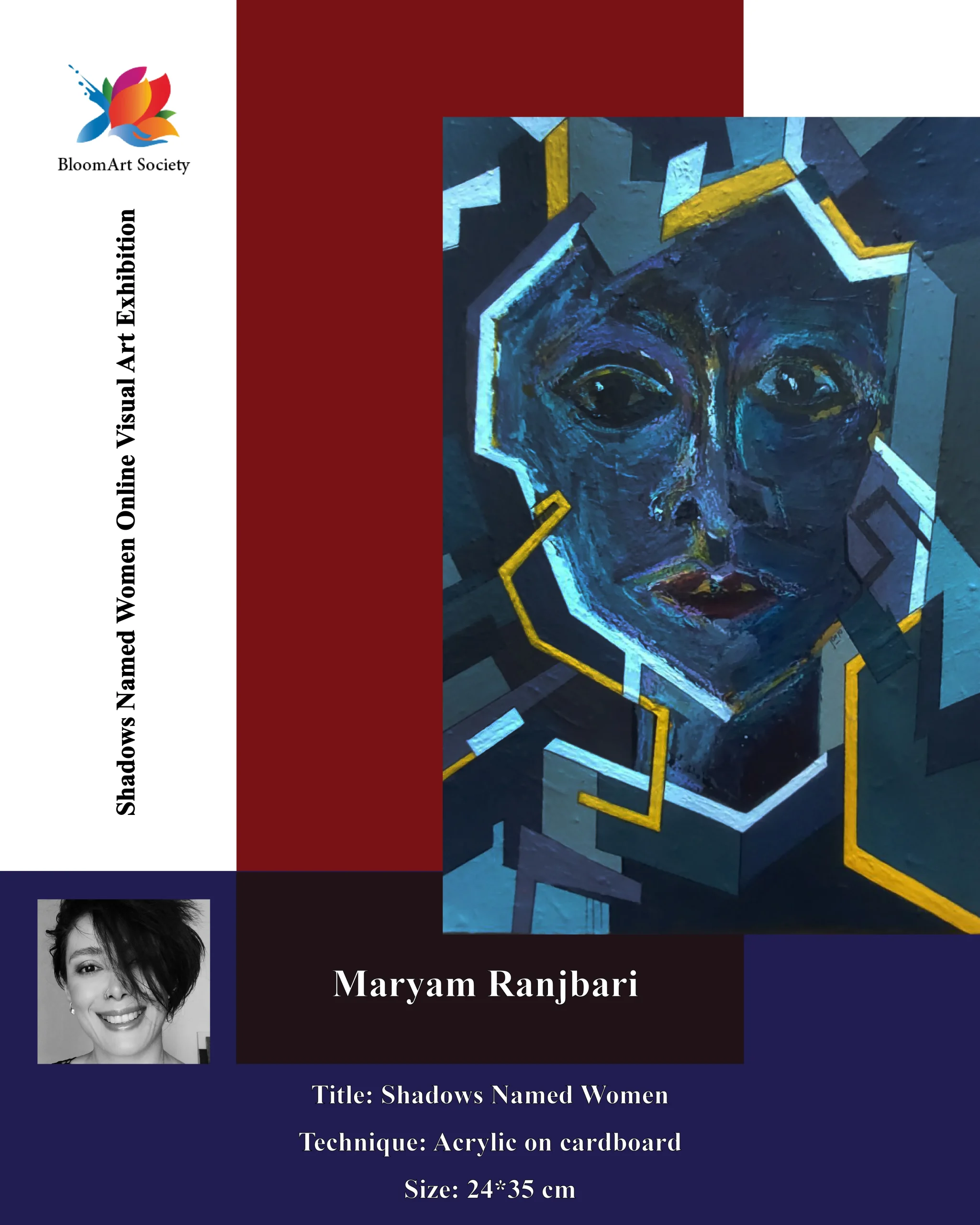
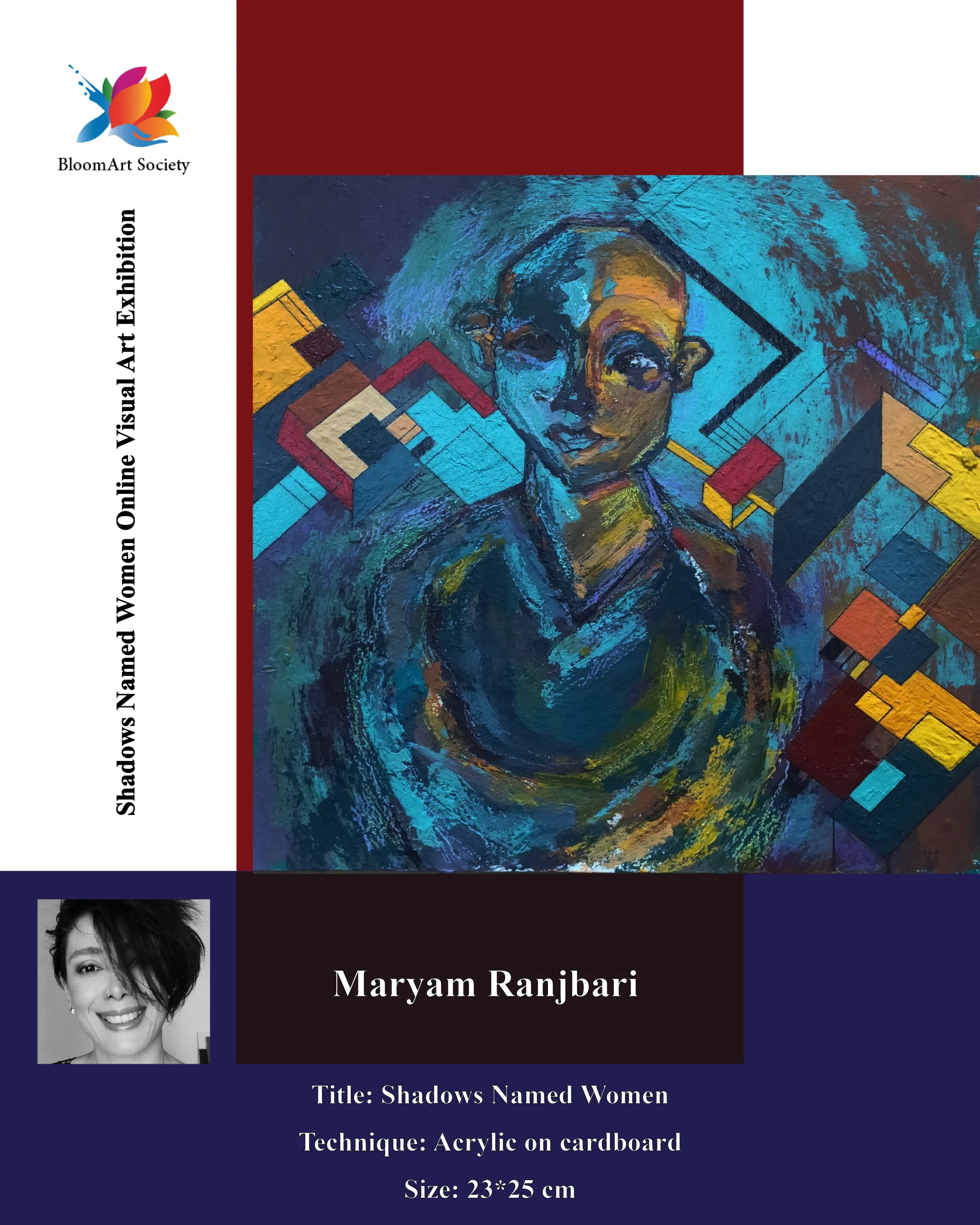
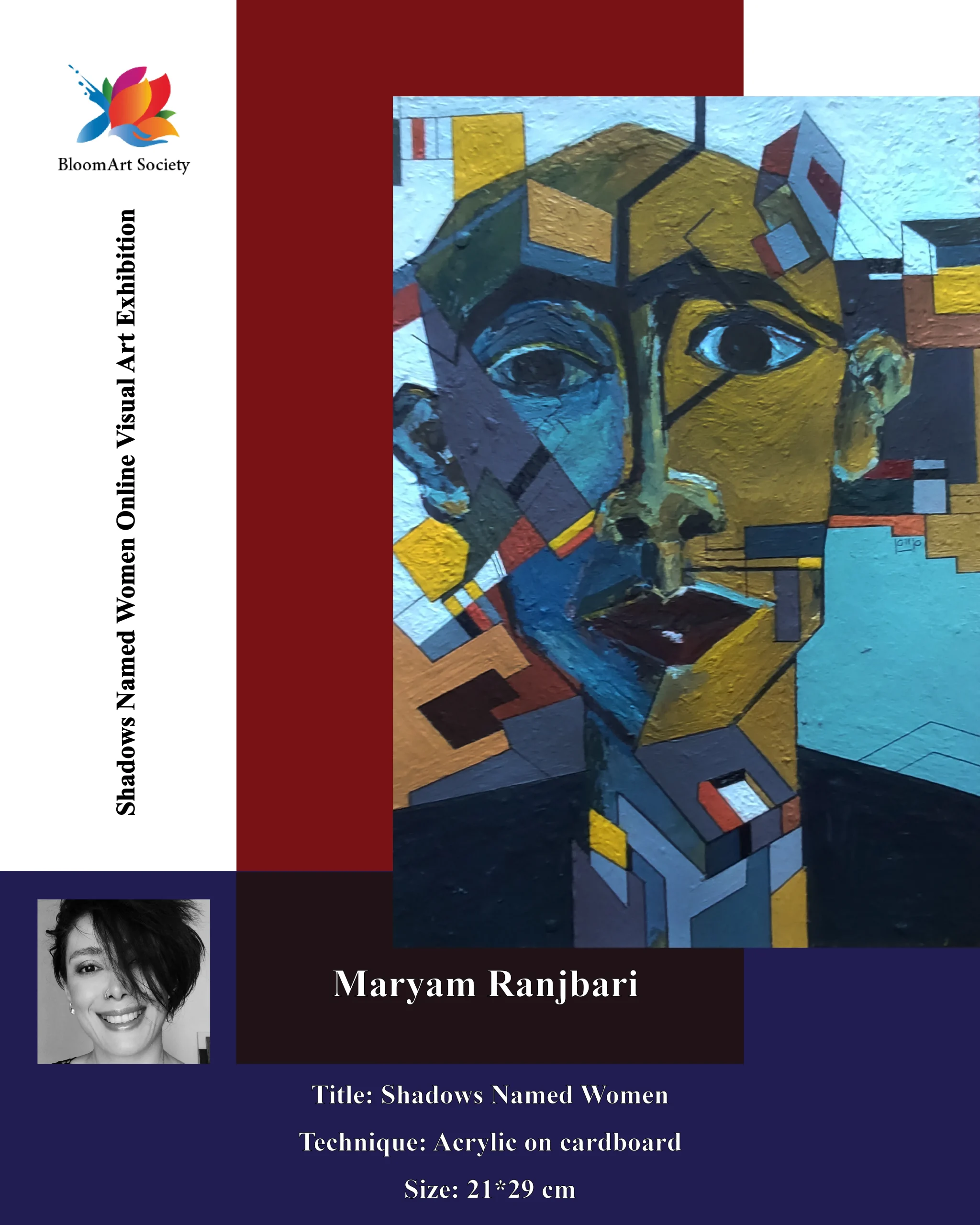
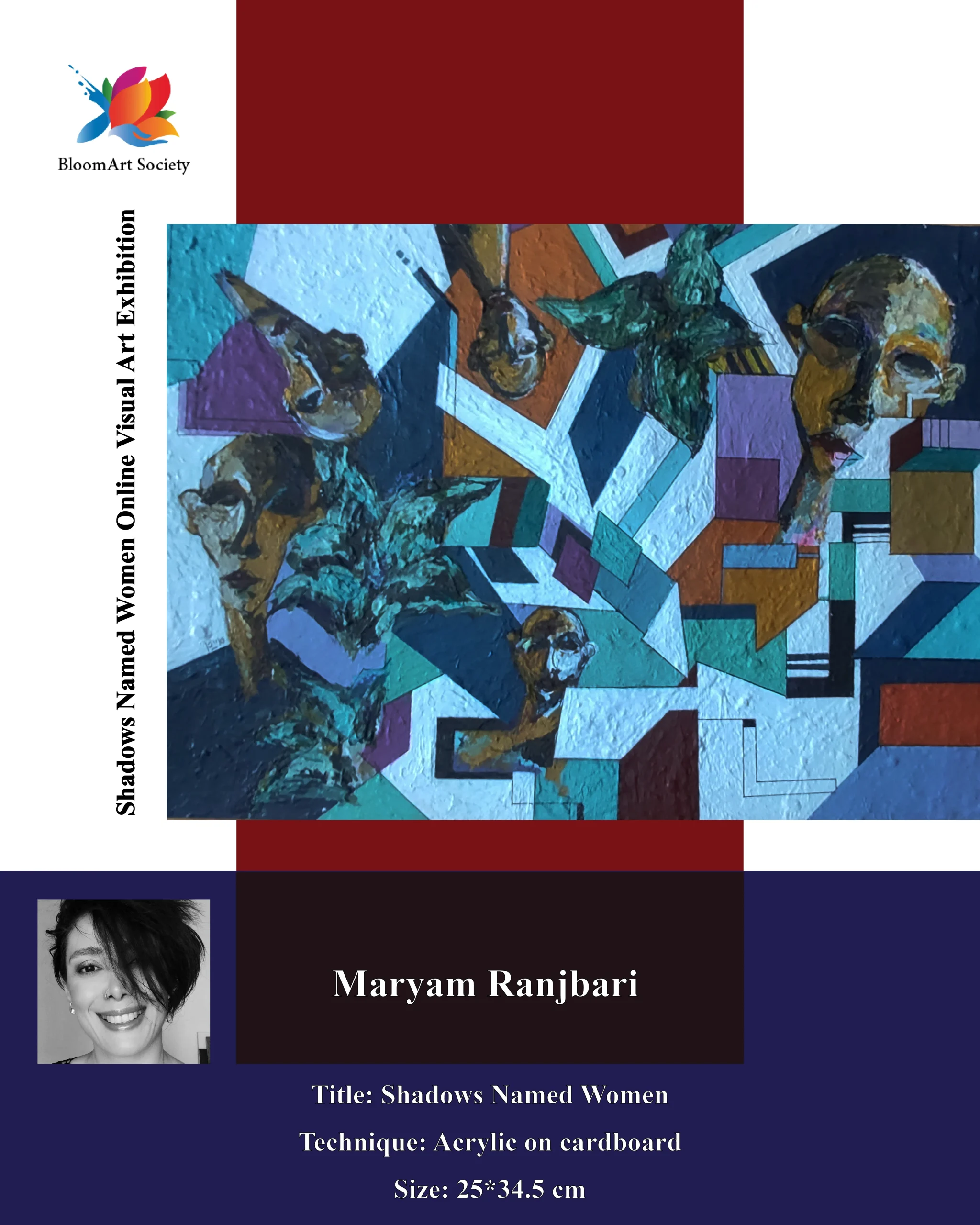
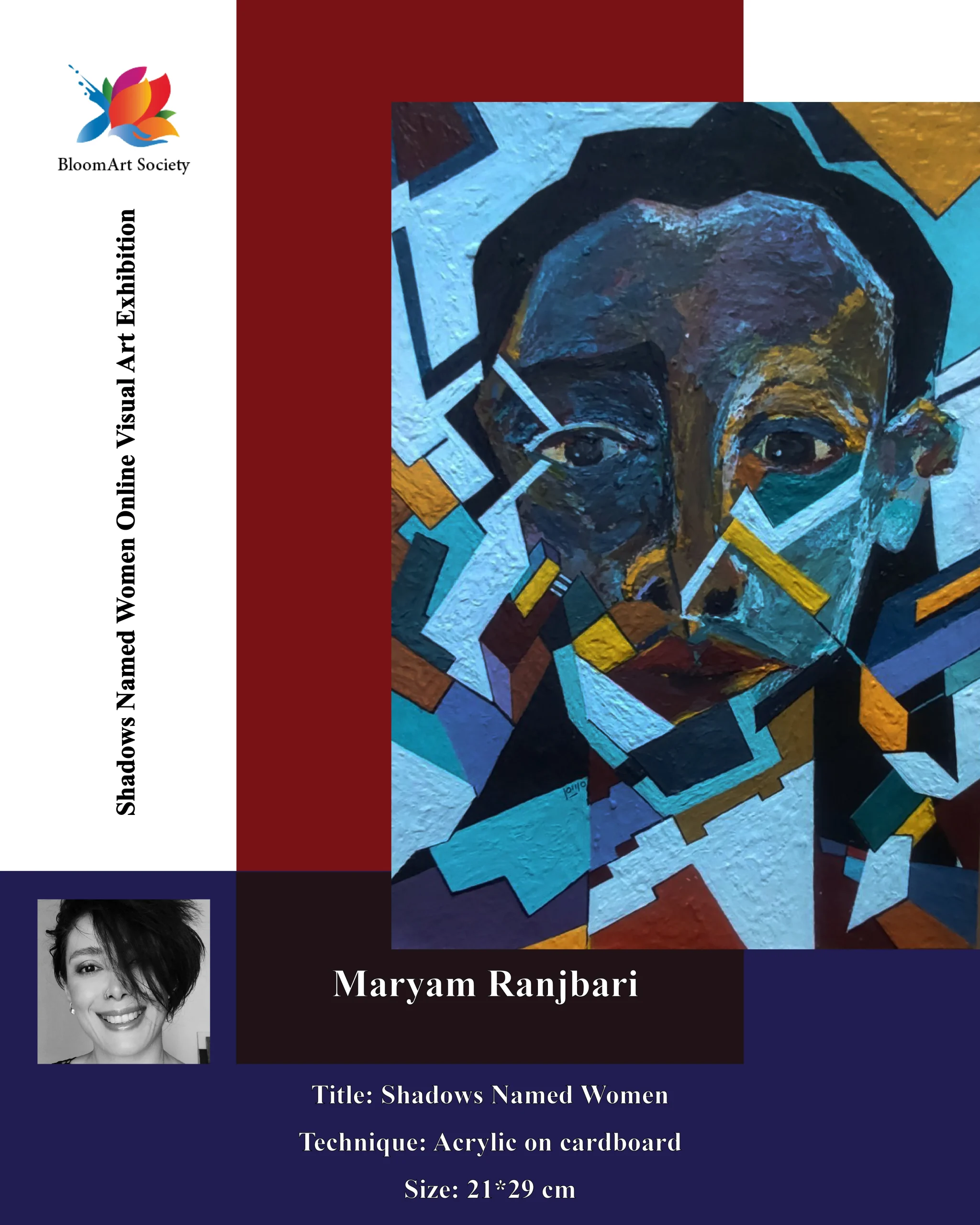
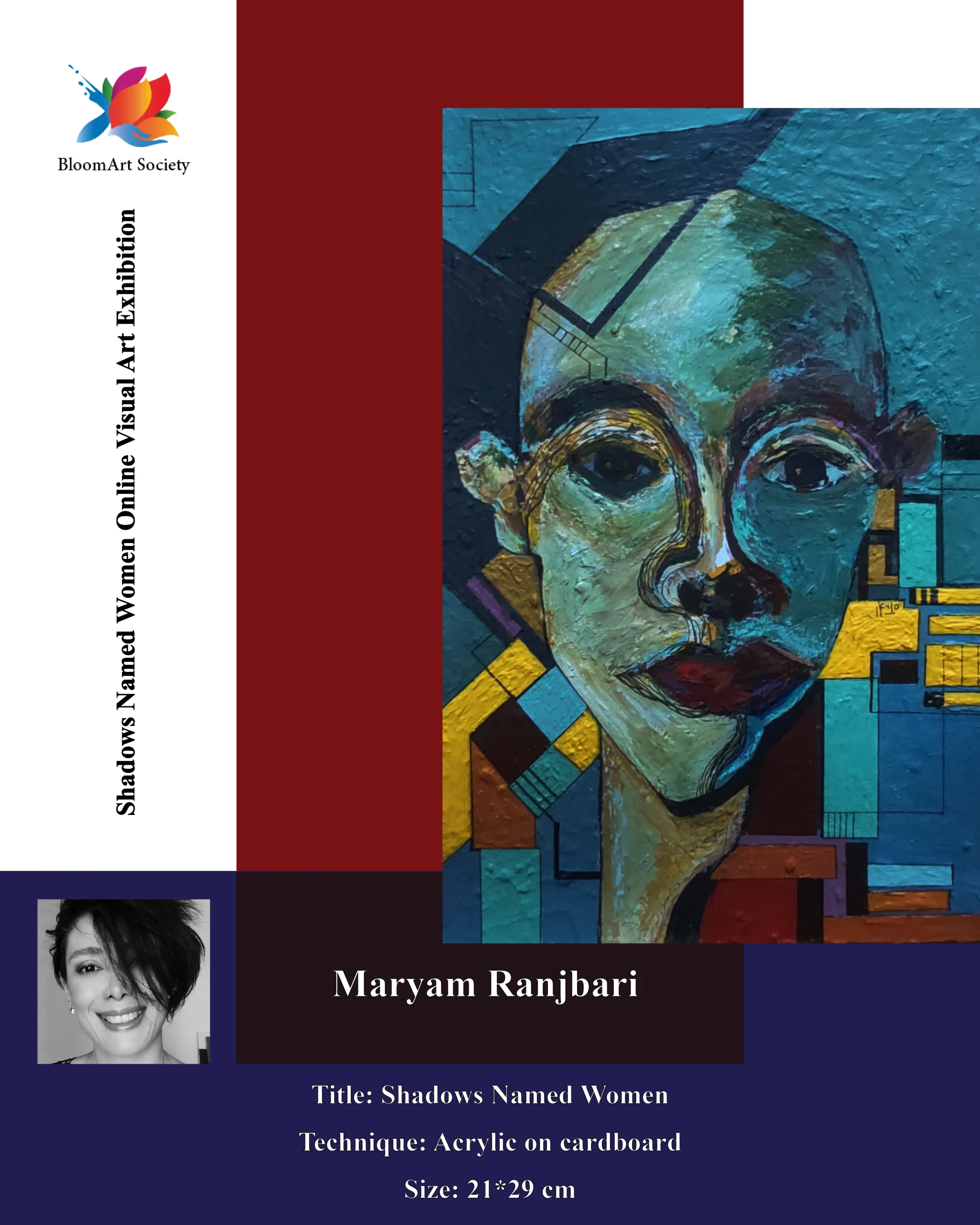
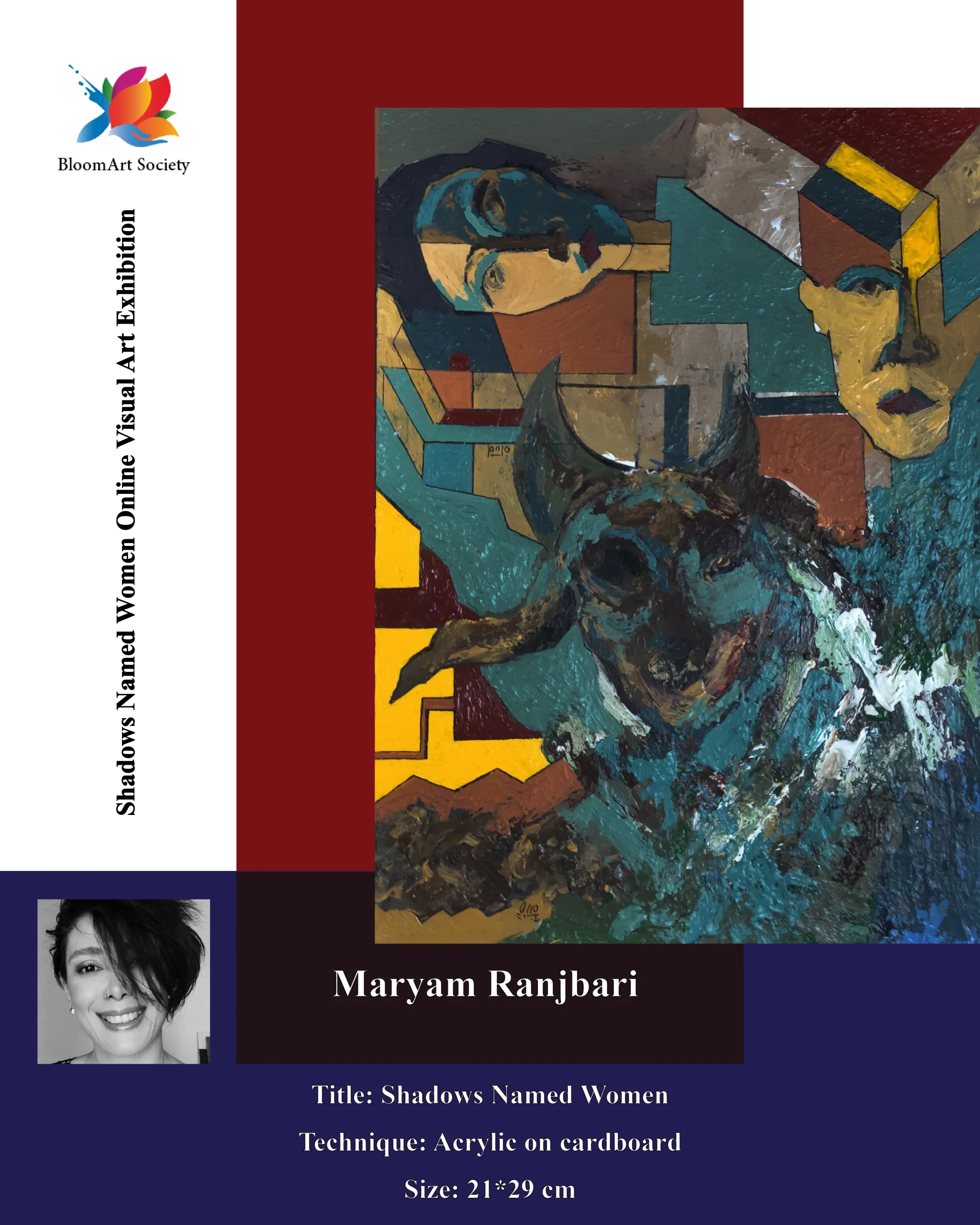
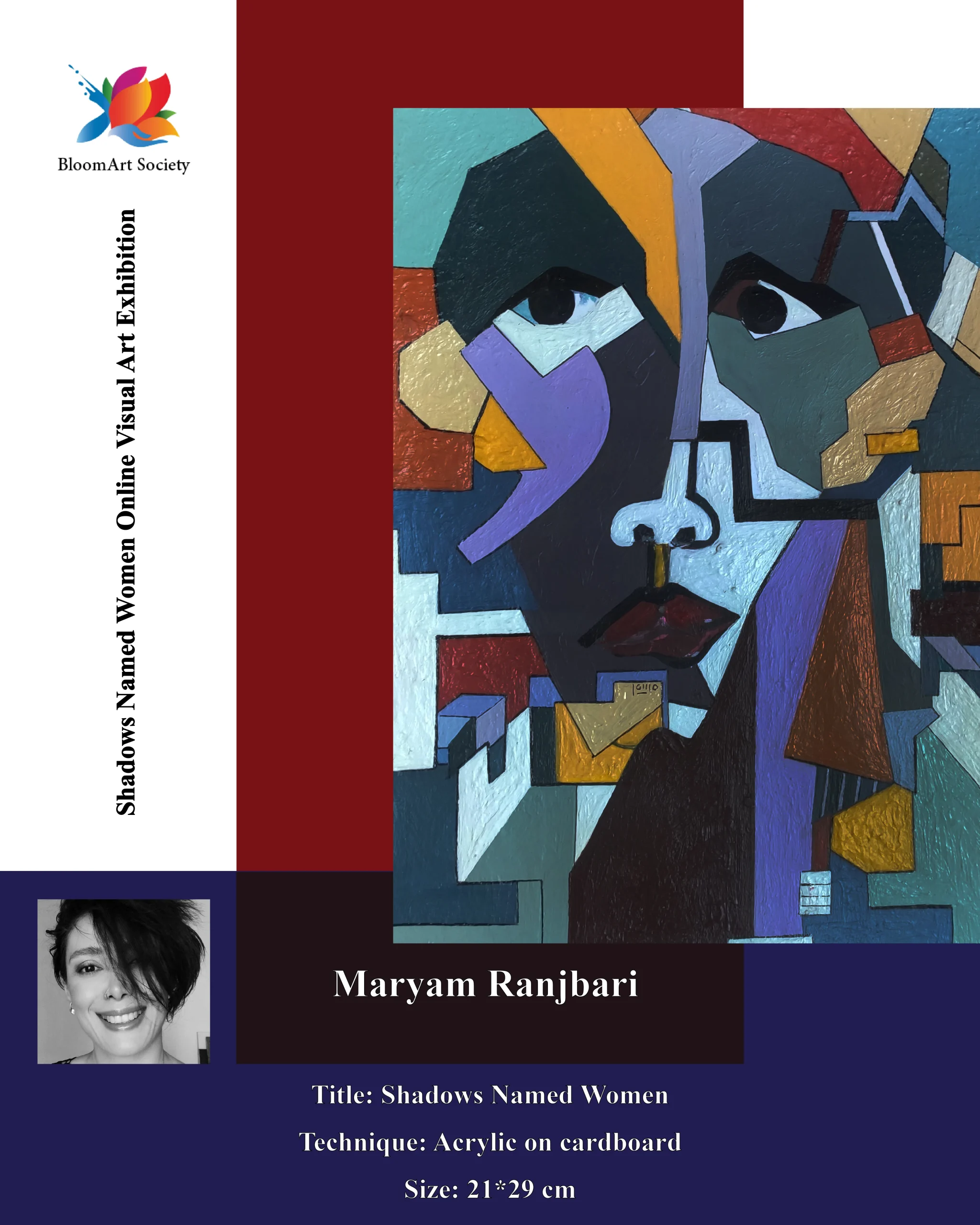
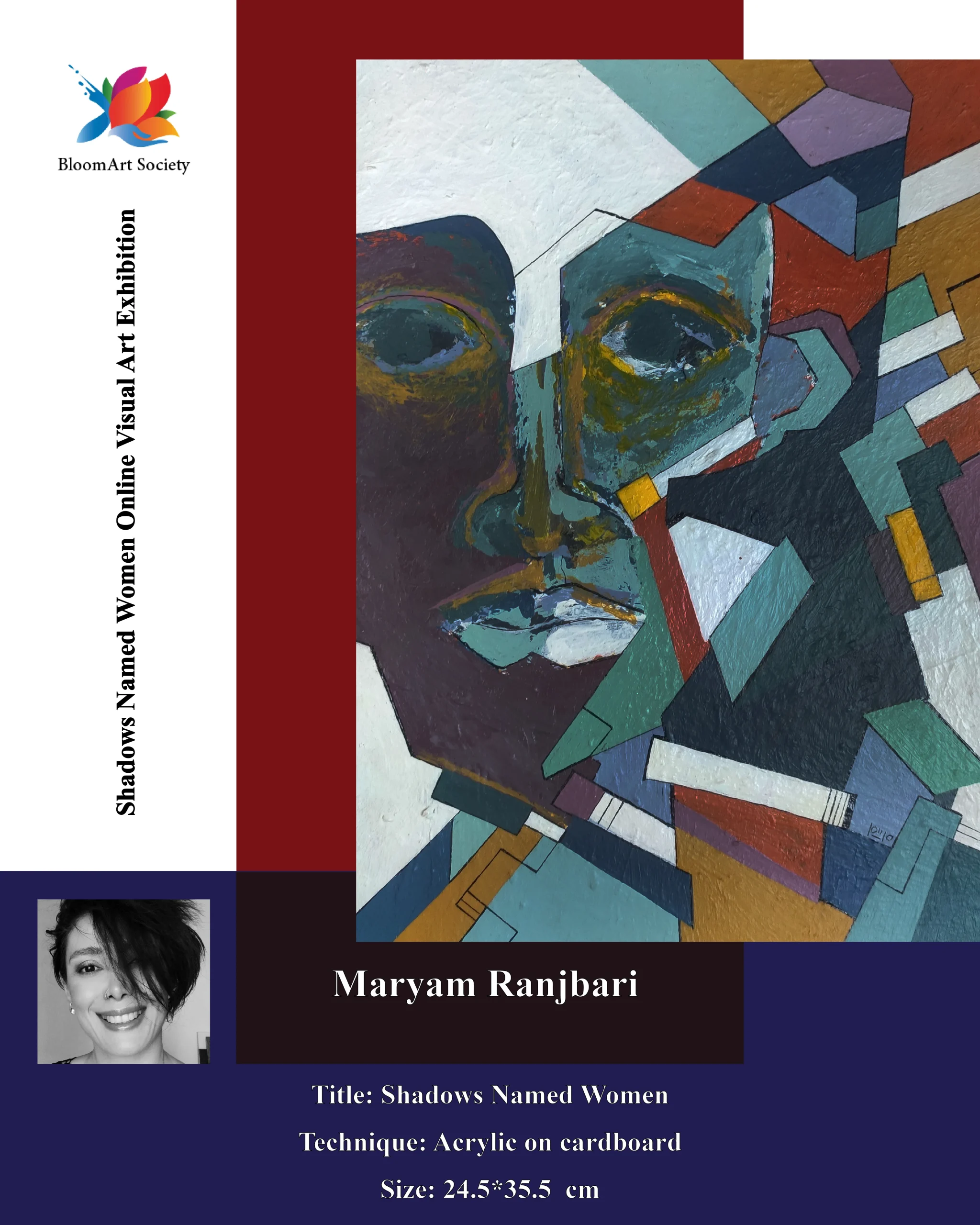
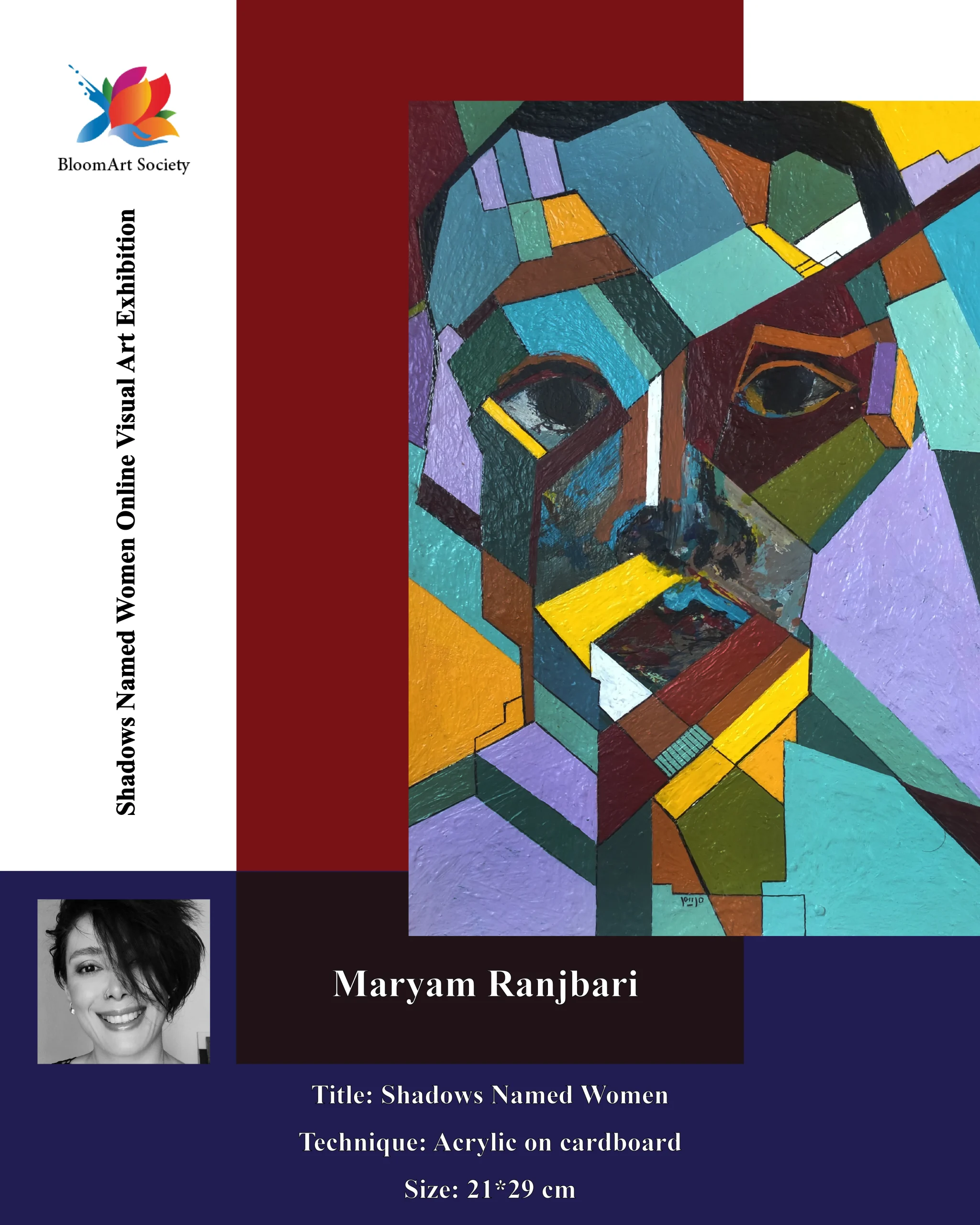
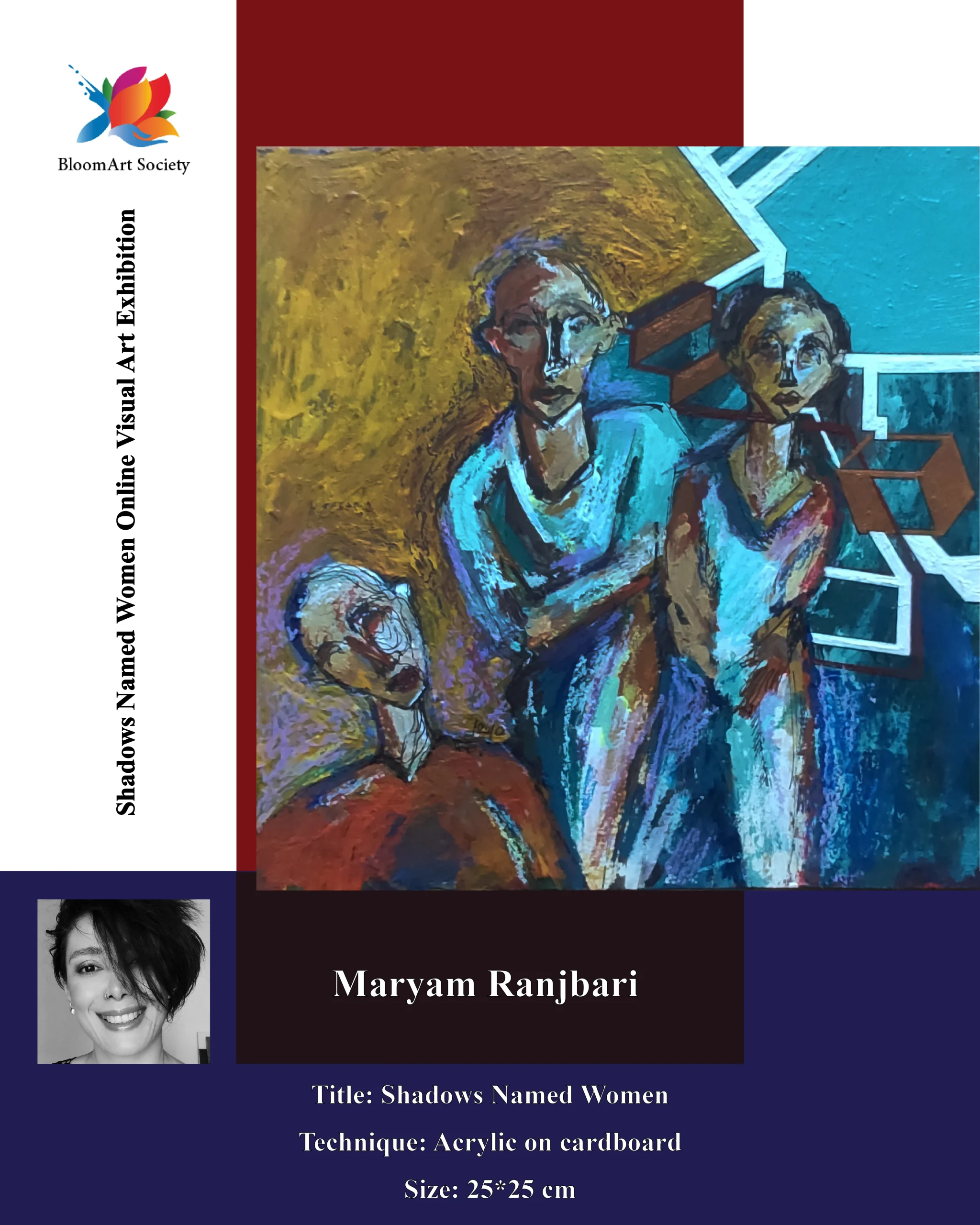
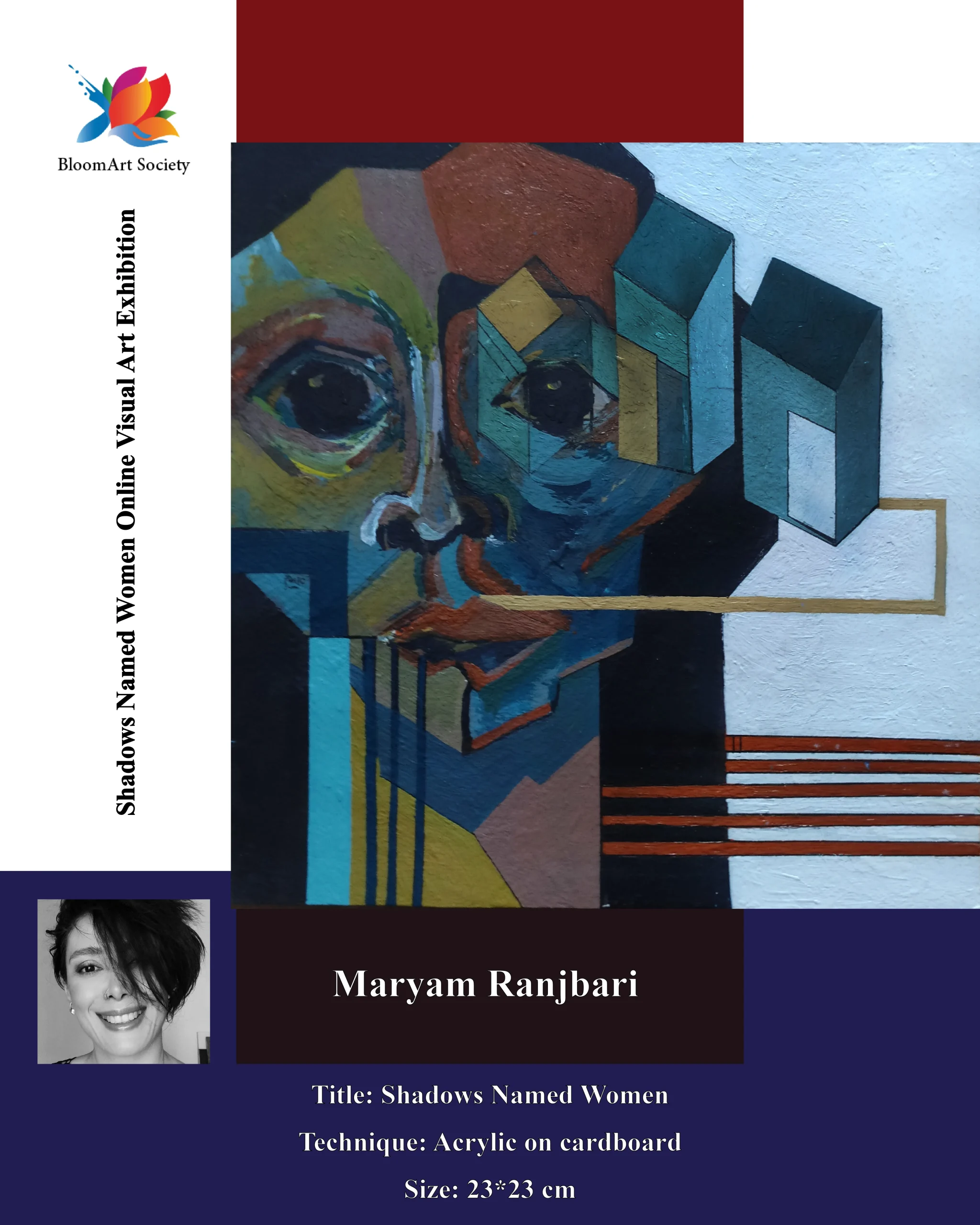
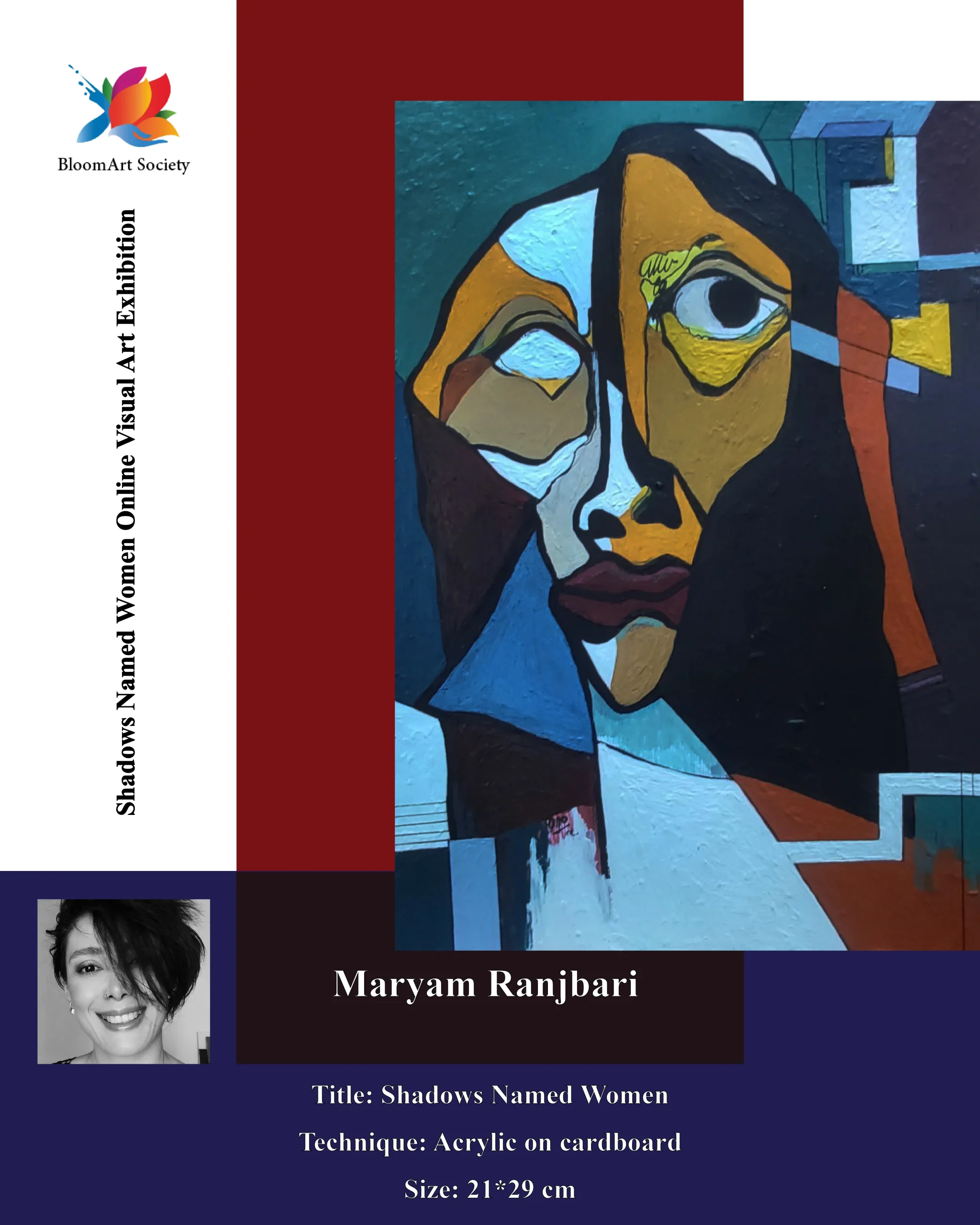
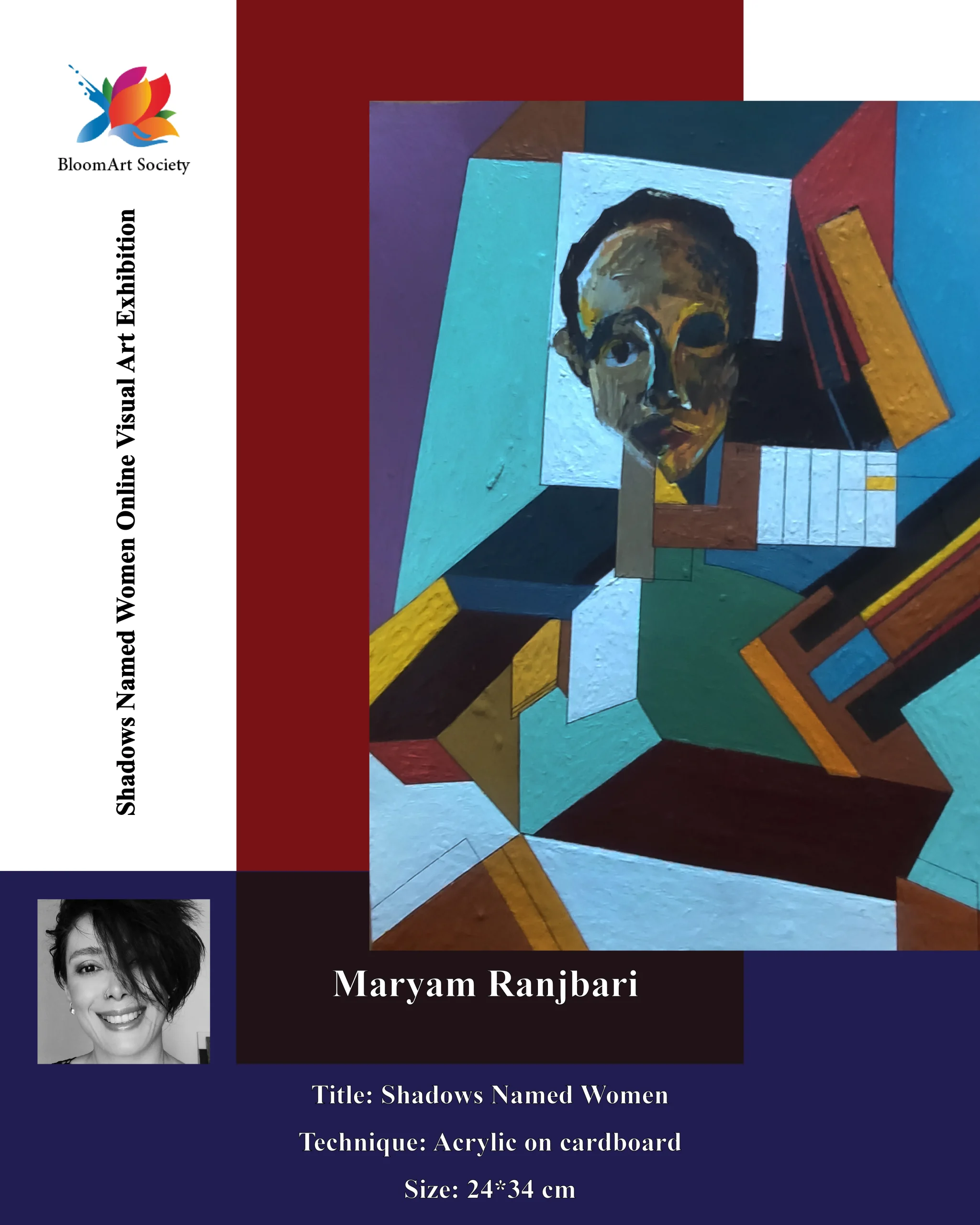
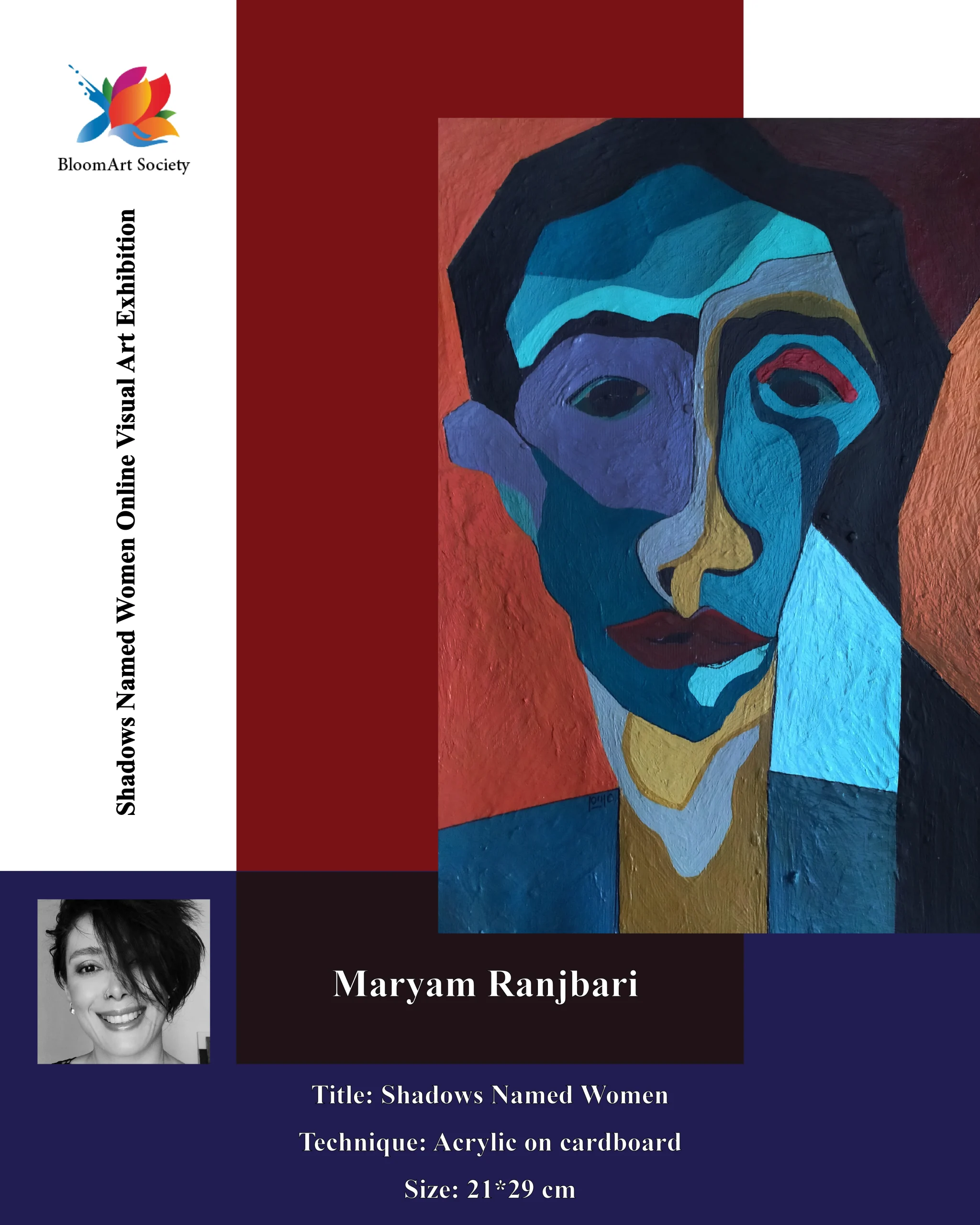
The series Shadows Named Woman is not an individual representation of the female body and face but rather a manifestation of both personal and collective experience in urban spaces—spaces that are constantly controlling and place women at the threshold between presence and destruction.
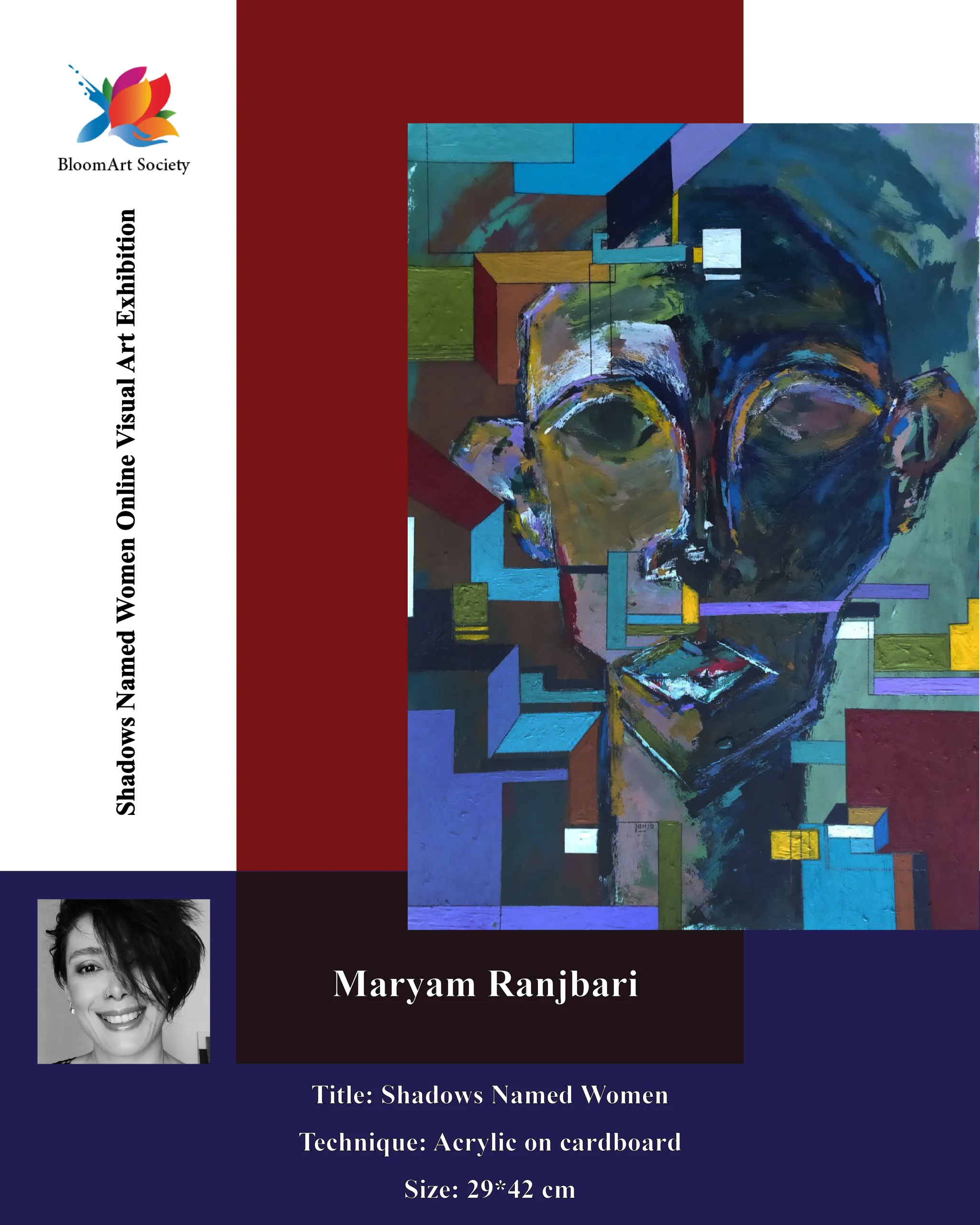
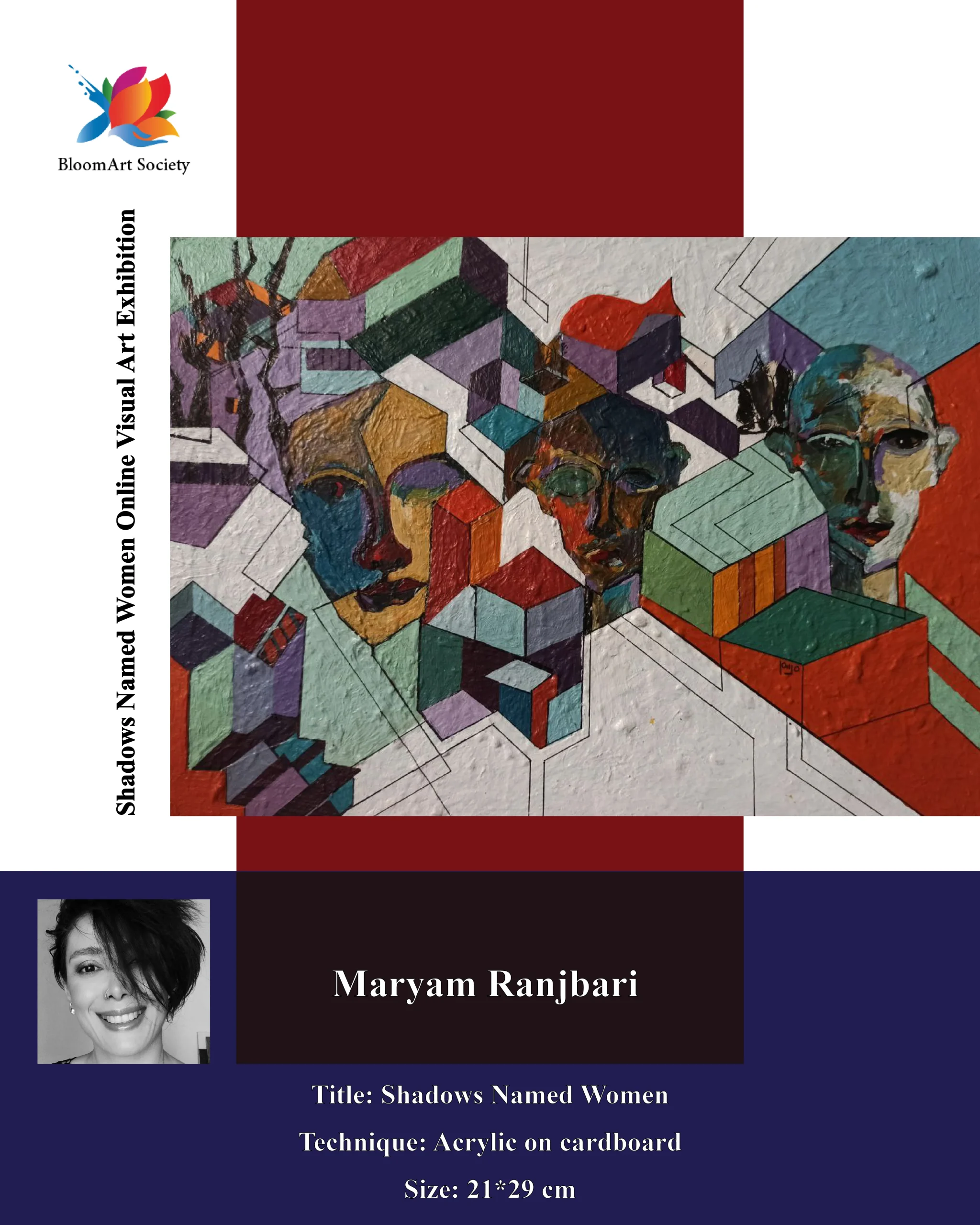
In these works, broken geometric forms, strong lines, and intertwined surfaces represent the threatening architecture of the city, which, like a wall, casts its shadow on the mind and body, preventing movement and freedom. In a powerful contrast to the violence, vivid colors and passionate brushstrokes appear, symbolizing the determination and audacity of women to be seen and to survive.
The faces in this series stand on the edge of collapse and endurance, with their large, watchful eyes bearing witness to the experience of controlling gazes in the city. These eyes, in their silence, reveal the truth.
These works tell the story of moments when the individuality of womanhood breathes with difficulty under layers of control, strictness, and imposed gazes, but never falls silent.
What is seen in these works is the struggle to assert presence and recognize the identity and character of women in a city that tries to hide them—an image of women who derive their identity not from the prescribed body but from thought and audacity. Instead of traditional forms, they carve a new path for themselves amid breaks and distances.
This series is a song of the woman’s presence in a city that attempts to ignore her—an image of women who, not in conventional forms but in broken shapes and lines, remain and create amidst the shadow of walls, the spaces between forms, and the battle of lines and colors. With a stunned gaze and the pain of years spent living in these cities, they have always endured and built. In this series, woman is portrayed not as a body but as a “condition,” a condition built from a new identity and the body of courage and bravery.